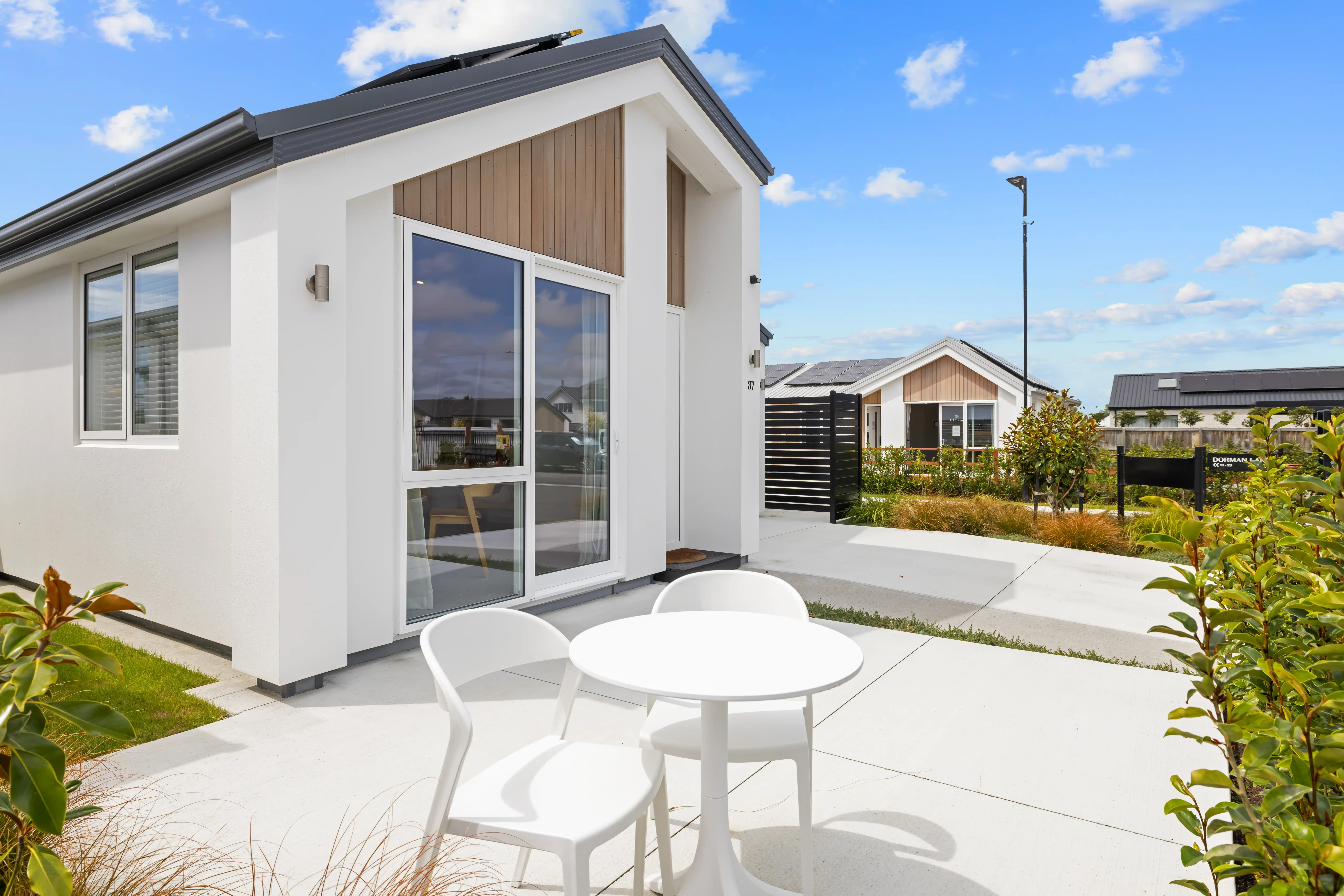
Moving into a lifestyle village involves choosing a village and home, understanding how you'll own it and what the ongoing costs are, getting independent legal advice, then planning your move. The process is similar to buying any home, but there are a few important differences worth understanding first.
What is a lifestyle village?
A lifestyle village is a community of modern, low-maintenance homes designed for people over 55 who want independent living with shared facilities close by. Residents live independently in their own homes and share amenities like lounges, gardens and communal spaces.
How is a lifestyle village different from a retirement village?
The biggest differences are ownership and care. Many retirement villages in New Zealand operate under an occupation right agreement (ORA), which gives you the right to live in the home rather than own it. Retirement villages also tend to offer a wider range of care services. Lifestyle villages focus on independent living, and ownership models vary, so it's worth checking exactly what you're buying.
Step 1: Choose the right village and home
Visit a few villages and picture everyday life there. Consider the location, closeness to family, shops and health services, the facilities, and the feel of the community. Walk through a display home if you can, and check the floor plans against the furniture you plan to keep.
Step 2: Understand the ownership model
This is the most important question to ask. Find out:
• Will you own your home, or buy the right to live in it?
• Who keeps any capital gains when you sell?
• Are there exit fees or deferred management fees when you leave?
• Can you sell your home at market value, and who manages the sale?
Step 3: Check the ongoing costs
Ask for a clear breakdown of all ongoing fees, what they cover and how often they change. Typical costs include a body corporate or village fee for maintaining shared spaces and facilities. Transparent, predictable costs make it easier to plan.
Step 4: Get independent legal advice
Always have your own lawyer review the sale and purchase agreement and any village documents before you sign. They'll explain your rights, obligations and costs in plain language.
Step 5: Sell your current home and plan your move
Most people need to sell their existing home to fund the move. Ask the village whether they can help with this. Then plan the move itself - the declutter, the pack-up, the transport and the final clean of your old home. Starting early and getting help makes this stage much easier.
Step 6: Settle in
Once you've moved, give yourself time to find your rhythm. Join a social activity, say yes to a coffee with the neighbours, and explore the local area. Community tends to grow naturally from there.
Frequently asked questions
Do you own your home in a lifestyle village?
It depends on the village. Some lifestyle villages offer full ownership, while others use a licence or ORA model. Always check before you buy.
What age do you need to be to live in a lifestyle village?
Most lifestyle villages in New Zealand are designed for people aged 55 and over.
Can I have pets in a lifestyle village?
Many villages welcome pets, though conditions may apply. Check the village's pet policy early if you have a furry companion.
A fairer way to live
At Harlow Lifestyle Village in Rangiora, residents own their own homes outright, not the operator. That means you can sell your home in the future at its true market value and keep any capital gains. Residents pay a weekly body corporate fee for the shared facilities, with no hidden fees. It's lifestyle living with capital gains - and the confidence that your home and nvestment are secure now and in the future.
This spring, we're also taking care of the hard parts of the move. New residents who sign on a Stage 2 or Stage 3 home before 30 November receive a complimentary Spring Moving Package with Moving On, plus a contribution towards legal fees. Need to sell your current home? In some cases we can help with that too, through our sister company Ultimate Properties. T&Cs apply.
Find out more about Consider It Sorted